

Авиаперелеты на мероприятия и события
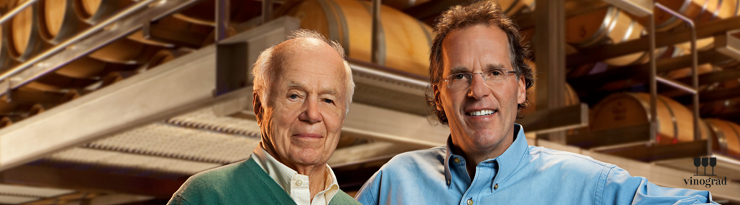
In the early 70’s, teen of Dagg Shaffer, along with his family moved from Chicago to California, where they started life as a novice wine makers in the area of stag’s leap. Red wine Shafer Vineyards’ Relentless was wine 2012 by the magazine “Wine Spectator’s”.
What you see when you look at yourself in the mirror?
Well…I see myself. And say, “I still have hair.”
Your father, John, decided to move his family from Chicago to NAPA when you were 17. How did you feel about moving?
It wasn’t a shock for me because he talked about it for a long time. But we were shocked that we actually did it. I wasn’t upset. Then I was a teenager and went to high school. You know what it’s like to study in high school…I felt not comfortable, and then – “Wow!” – we’re going to Northern California. What is it? On TV always broadcast cherleders beautiful Northern California beaches with girls in bikinis, of course I was excited, what is it, North California.
Do you think you would be in a world of wine, if your father has not made this bold move?
I don’t think that would have been in the wine industry. Or at all in any way concerned in this sphere. I was away from it. My father was not a wine drinker – he liked Bourbon and beer. At that time wine was only Mateus and Lancers. He was interested in the fact that the wine industry is rapidly and actively growing, and it’s a good investment. He later admitted to me that he always wanted to work outdoors.
1978 was the year of the first harvest. You have an idea about what you were doing?
I don’t think my dad might be upset if I told you that I knew about winemaking that he believed needed to know. He was a consultant. We then rose, then fell. We had about 8 bottles of wine, and I can say that it was quite a phenomenal wine.
Why your father chose the Stakes Lip?
At that time did not exist for this name. The mountain in the area called the Lip Stakes, but the district had no title. Until that moment, until dad bought this place, he tried to sell for five years. There was just a house and a shed for tractors. There was no sign of the wine sector in comparison with today.
It turns out, your father has made a great contribution to the establishment of the Stakes of Lip, right?
In 1989 he teamed up with neighbors and they have created a community, and then filed to the government about joining the AVA.
AVA is very common recent years. How do you feel about this?
It’s hard to explain. I think that in General it is useful – it gives people the opportunity to learn the specifics of the geography, but, in the end, the consumer decides whether the AV value or not.
Growing grapes in the hills was not very common in the time when you started, why you decided to do this?
My father read a few books about Italian wines, which said that this is the best area to obtain harvest of high quality. And that thought stuck in his head. In 70-e years people have not cultivated the vineyards on the hills, because it was worth twice the price, you get twice the berries, but paid a ton. Why not on the hills? Because it’s stupid.
The Hillside Select – it’s your best wine. How did you achieved?
50 acres of our farm is Cabernet Sauvignon. 35 acres located in the hills. We have 8 or 10 different units, thus we have identified the best blocks to produce this wine. However, they can change each year. The decision is made until the time as the grapes does not fall on production.
Winemaker Elias Fernandez and I worked together for 29 years. We have seen a lot and know our farm as their native body. We know what happens to the vineyards in may or June. And even before Cabernet we without a doubt say which blocks will be the highest quality.
What does One Point Five?
It’s our family business. The family is the owner of this company, which is very important. My father started the business at the age he was 50 years old. I joined very young, so it turns out that this is not a matter of two generations, and one and a half. One Point Five.
What does the name Relentless, wines of 2012?
We named this wine in honor of the traits of Elias – the persistence.
Does NAPA too addicted to Cabernet Sauvignon?
What’s wrong with that? There are fabulous wines that are produced around the world and is a beautiful thing – their customer is the winner. I can get Pinot from New Zealand, Shiraz from Australia, Cabernet Sauvignon from NAPA valley. My opinion is that grape growers should take from the fact that their location can offer. If we were 10 or 15 miles from SONOMA, I have not grown Cabernet on the hillsides. It is a place where not too hot and not too cold. You can grow Cabernet in this valley, and I don’t see any risk.
If you change flavors, you will change with them. In the valley we went through phylloxera and had to be transplanted within five or six years. Let’s say that someone says that Cabernet is bad for you, and Zin is better and the public will say not to do more Cabernet. I, most likely, would be to grow Zin. We could do it for five or six years.
What in your career are most important to you?
The sense of confidence that we can produce wine of the highest quality from year to year. It happened in the middle of 1990-ies. Some may say that this has happened before, at least I think so.
What are not the best moments?
I made a few wines in the mid-1980s and they were not successful, so I had to pour. There have been some problems with sulfates, and as soon as we have them bottled, it got worse, there was a bad smell. And so we had to pour 3000 bottles, and you can imagine how it happened. Then we corrected the error and re-poured all the bottles. After 6 weeks we did the same thing with 4000 bottles. And, in the end, the wine was delicious. After 10 months the wine expert gave them a rating of 91 points from 93.
Lately a lot of hype going around about climate change and how it may affect the NAPA valley. What do you do to prepare for this?
Of course, I’m not going to replant Cabernet instead of Chardonnay because of global warming. All of these studies have their own pitfalls. 2010-2011 was the coldest in years. 1984 and 1987 were very hot. So for me it’s like a trend. But I certainly pay attention to it. But nothing can stop us.
The wine business is not always successful as you have been through the economic crisis?
We had a temporary hard during the crisis as well as anyone. Business slowed down, but by 2010, everything was back in its place. And now better than ever.
Is there anything in the NAPA valley that you would like to fix?
It would be great if people would perceive us as real farmers. In the end, what we do in the vineyards – all connected with Mother Nature. Every season for you is a new discovery and only depends on you, what it will be.
To make a good wine year after year is not easy. What you grow grapes in the NAPA valley doesn’t mean success. Always need a lot of attention. Despite the lack of recognition of us as farmers, we are, after all, have achieved this. We organize dinners for the wine in expensive restaurants and talk about our delicious wines. People don’t see us driving tractors or loading machines.
What brings you pleasure?
Five of my children. Three are studying at the University, and two are at home.
What do you think can make the world a better place?
I believe that if people are regularly drinking more champagne – that will make the world a better place. Especially if they will drink Billecart-Salmon.
